
Concrete Retaining Walls in Kirkland WA - a wall that holds your slope and drains
Leaning blocks, a slumping slope or mud washing onto the patio? We build concrete block walls that hold the ground and let the water out.
- Licensed and insured.
- Free on-site estimates.
- Expect a reply within 1 business day.
What goes into building a retaining wall in Kirkland?
A concrete retaining wall in Kirkland holds back a slope so the ground above stays put and the yard below stays flat. We usually build them from interlocking concrete blocks that let water drain out through the face, so it doesn't build up pressure behind the wall.
Most people call when a slope is creeping onto a concrete patio or a walk, or when they want a flat spot in a yard that's mostly hill. The wall's height and what sits above it move the price and the schedule more than anything else. A short wall under a lawn is a plain block job, but a tall wall or one under a driveway needs reinforcement and an engineer, and maybe a permit, which adds design time and digging before we set a single block. Soft or wet ground, tight access and how much dirt has to move add to both. Your written estimate gives you the figure for your wall, so you're not working from a guess.
How do you know your slope or retaining wall needs work?
Wall leaning or bulging out
If the top tips forward or the middle pushes out, the dirt and water behind the wall are winning. Usually nobody planned a way for the water to get out, or the base was never packed. A lean doesn't straighten itself, and the longer you wait, the more of the wall gets torn down and rebuilt.
Mud on the patio after rain
When every heavy rain leaves dirt on your patio, walk or driveway, the slope above is moving. Either there's no wall or the one you have is too short to hold it. Each storm takes a little more of the yard, and the mess tends to end up against the house.
Water seeping at the bottom
Wet ground or a puddle at the foot of the wall that hangs around after rain means water is sitting behind it or under it. Water pushing on a wall is how a straight wall turns into a leaning one, so fixing the drainage now costs less than fixing the wall later.
How we build concrete retaining walls
The first things I want to know are how tall the wall is and what sits above it, because that tells us whether it's a simple block wall or one that needs an engineer. We plan where the water goes behind the wall from the start. Then we dig out the trench and pack a gravel base so the first row sits level and doesn't settle with the dirt. We set that first row carefully because every row above follows it. From there we stack the courses, fill behind them with gravel, put in the drainage the plan calls for, and backfill and pack in layers as the wall goes up. If the budget gets tight, I'd rather you save on the cap block than on the base, because the base gets buried on day one and it decides whether the wall stays straight.
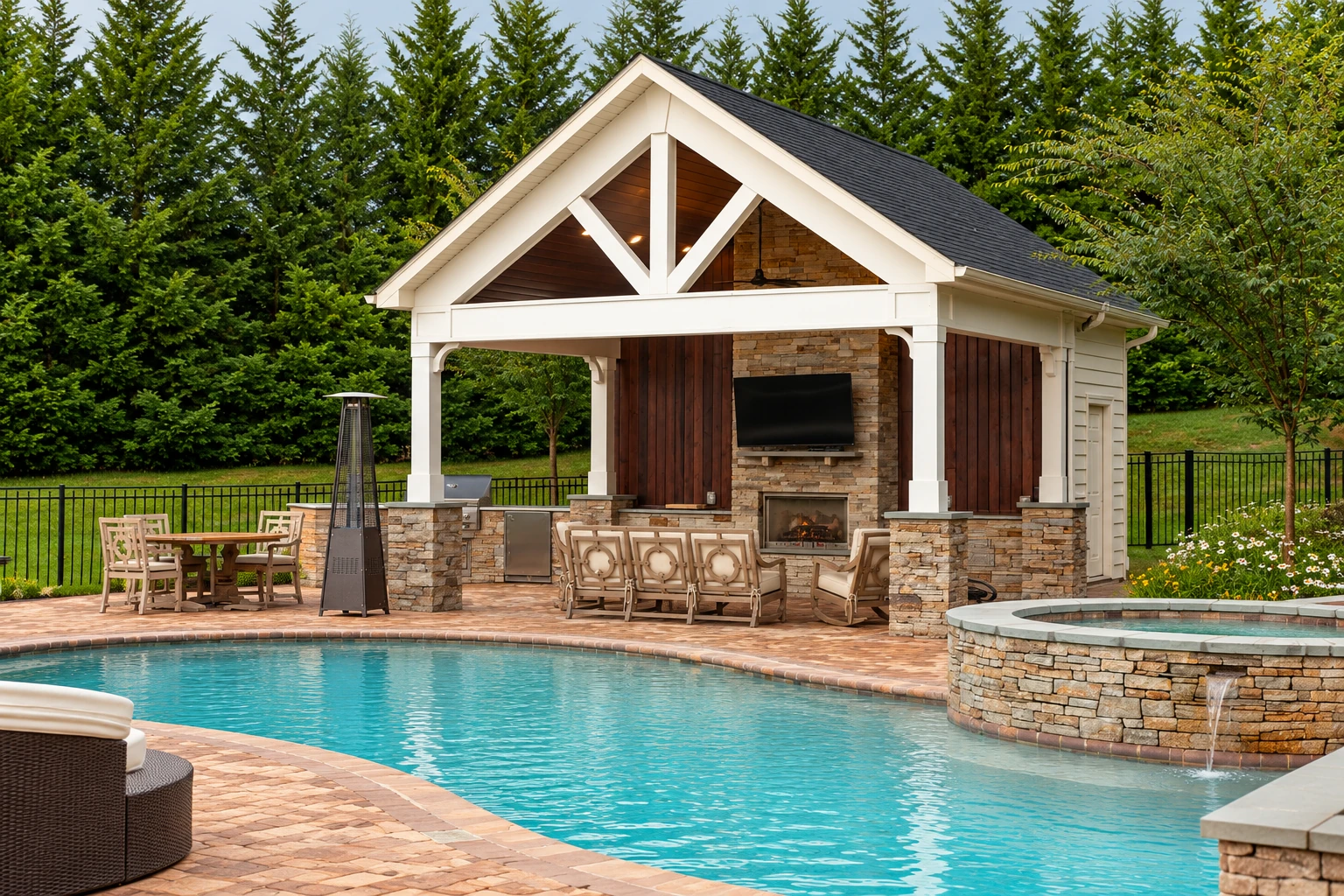
Walls rarely go in alone. A pool in a sloped yard usually needs a wall to hold the hill, and we plan it with the concrete pool deck so the deck sheds water away from the wall instead of into it. When a wall cuts into a hillside to make room for a shop or storage space, we can do the concrete floor installation on the flat ground it leaves.
Short block wall
This suits a garden bed, a lawn edge or a low step in the yard with nothing heavy above it. It's a plain build, and most of the money goes where it should, into the base and the drainage.
Engineered, reinforced wall
This suits taller walls, terraced walls and walls with a driveway or a slope above them. We build it to the engineer's design, with reinforcement tied back into the soil behind it, because a wall like that holds up a lot more than it looks.
Get a written estimate for your retaining wall
Send the form and we'll get back to you within one business day. I'll come out, look at the slope with you and send a written estimate. It's free, and there's no obligation.
- Based in
- Kirkland, WA 98033
- Hours
- Mon–Fri: 6 AM–11 PM, Sat–Sun: 8 AM–9 PM
What happens when you call about a retaining wall in Kirkland?
Here's how it goes from your first call to the walk-around at the end, so you know who you'll talk to and when you'll see a price.
Call or send the form
Tell us roughly how tall the wall needs to be and what's above it, and we'll set a time for me to come out. A few photos of the slope help me show up with the right questions.
Walk the slope together
I walk the site with you, measure, and check which city or county office covers your address. Then I send a written estimate, so the number is on paper before anyone digs.
Prep the ground first
Once you're set, we dig out and pack the base and get the drainage ready before the block or concrete shows up. If your wall needs a permit or an engineer's design, the start date waits on those, as we cover below.
Build, backfill and walk it
We set the courses, backfill behind them and clean up. At the end we walk the wall with you, so you know where the water goes now.
Why Kirkland homeowners call Precision Kirkland Concrete for retaining walls
The owner prices and builds it
I come out, look at the job and write the estimate myself, and I'm on site with our crew when we build. The person who looked at your slope is the one making the calls when the base goes in.
In business since 2020
I learned on small pours and on other people's crews before starting this business in 2020, so I've been running our own jobs for six years now. That's long enough to see that most trouble with walls and slabs starts before the first block or the pour.
Licensed and insured
We're licensed and insured. A retaining wall holds up part of your yard and sometimes your driveway, so ask every bidder to show you theirs.
Ready for hillside lot reviews
On a Kirkland lot with a steep slope or a wetland nearby, the city can ask for more before a wall goes in, as we cover below. We bring that up at the estimate, so it doesn't catch you halfway through.
On a wall, the part that matters most goes in first and gets buried, so ask for your estimate and I'll show you what's going under yours.
Retaining walls, slopes and permits in Kirkland
Kirkland's permit list names retaining walls and rockeries over four feet tall. It also names removing or adding more than 50 cubic yards of soil, or any amount that changes where drainage runs. The city's permit exemptions apply only outside flood hazard, wetland, steep slope, shoreline and other critical areas, so a shorter wall on a hillside lot may still need a permit. You can pull a Parcel Report from the city's Property Search Tool to see whether any of those areas apply to your address. On steep or hillside lots, the city may also require a geotechnical report on landslide, erosion and seismic hazards, from a geotechnical engineer or engineering geologist, with the permit application for moving or reshaping the ground. If you're not sure where your wall lands, Kirkland Development Services handles permit questions. When your job needs a permit, we can file it for you or help you file it, and we plan the start around the approval and the inspections.
Most of the wall calls we get here are yards cut into a slope, driveways with a drop-off along one side and patios that need a flat spot carved out of the hill. We see the same kinds of lots on jobs in Bothell and Redmond, and we handle them the same way, base and water first. We're based in Kirkland and take jobs across King County and south Snohomish County, so if your city isn't listed, call and ask.
Questions about retaining walls in Kirkland
How much does a concrete retaining wall cost near Kirkland?
A concrete retaining wall in the Seattle area usually costs about $40 to $60 per square foot, all-in. Height, whether the wall needs an engineer and reinforcement, how much bad ground has to come out and how easy it is to get material to the spot all push your wall toward one end of that range or past it. Your written estimate gives you the number for your wall.
Does my retaining wall need a permit in Kirkland?
If the wall is over four feet tall, it's on Kirkland's permit list. A shorter wall can still need a permit on a steep slope, wetland, shoreline or other critical area lot, as covered above. When a permit is required, the application, inspection scheduling and permit status all run through the city's MyBuildingPermit.com portal.
When does a retaining wall need a soils engineer?
One block maker says reinforced walls are called for when a wall is 4 feet or higher, terraced, on a slope, on weak or wet soil, or has a driveway above it. For those sites it recommends a soils engineer and a professional contractor, so owners plan for both from the start. That's why height and what sits above the wall are the first things I ask about.
What causes a retaining wall to lean or fail?
Usually it's water pushing from behind or soft ground underneath. Industry guidance for block walls says the gravel fill behind the blocks catches stray water and eases the pressure but isn't meant to be the wall's main drainage path, so ask any contractor how the main path for your wall is planned. One maker's guide also says heavy clay, wet soil or ground that's been dug before gets removed and replaced with packed gravel fill before the wall goes up.
How long does it take to build a retaining wall?
Stacking the block is usually the quick part, since an industry design manual says an experienced crew of three or four typically puts up 300 to 500 square feet of wall a day. The digging, any ground replacement, the drainage, and waiting on an engineer's design or a permit usually take longer than the stacking. I'll tell you what your wall's schedule depends on when I write the estimate.
How do I check a contractor's registration in Washington?
Before you sign anything, look the contractor up in L&I's Verify a Contractor, Tradesperson, or Business tool, which lists registered Washington contractors. The state requires all construction contractors to register with L&I, and state law requires them to be bonded and insured.
Concrete work that goes with a retaining wall
Concrete floor installation
If a wall cuts into the hill to make space for a shop or storage room, a new concrete floor can go in on the level ground it opens up.
Concrete pool decks
A pool set into a sloped yard usually needs a wall holding the ground, and the deck around it should shed water away from that wall.
Concrete patio construction
A wall is often what turns a sloped backyard into room for a flat patio, so we plan the two together and match the grades.
Service areas for retaining walls near Kirkland
Precision Kirkland Concrete is based in Kirkland, WA, and builds retaining walls in the 12 cities below, including Bellevue and Woodinville. These are the cities with their own page, not the only ones we work in, so if yours isn't listed, call and ask.
Kirkland, WA
Book an on-site look at your wall
Have the wall's rough height, what sits above it and your Parcel Report handy when you call (425) 285-8195 or send the form, so the first visit gets straight to what your wall needs.