
Concrete Contractor in Mercer Island, WA - Driveways and Patios Built on Solid Ground
Precision Kirkland Concrete pours driveways, patios, walks, steps and garage floors for homes on Mercer Island, and builds the retaining walls and footings hillside lots often need. We're a Kirkland crew, and I'm on site for the pour.

- Licensed and insured.
- Free on-site estimates.
- Expect a reply within 1 business day.
Mercer Island homes and the slopes they sit on
Mercer Island is mostly houses. It has a small downtown of shops and apartments, and quiet residential streets that climb away from the shoreline. On our jobs here we see older homes with driveways that have settled and split over the years, often right next to newer rebuilds where the owner wants the outside work to match the house. Drives tend to be short and steep, with garages set above or below the street, and that's a different job from the flatter, roomier lots we pour on around Cottage Lake.
That slope runs the job. Before we talk finishes, we look at where the ground wants to go, where the water runs and how a concrete truck reaches the forms, because those three things decide how much digging, base and wall work your project needs.
Concrete services for Mercer Island homes
Concrete driveway building
Older driveways here often crack where the base was never packed. We dig out, compact the ground and pour a drive that sends water toward the street.
Concrete patio construction
A patio on a sloped yard here needs a packed base and a slight fall away from the house, so rain doesn't pool against your walls.
Stamped concrete services
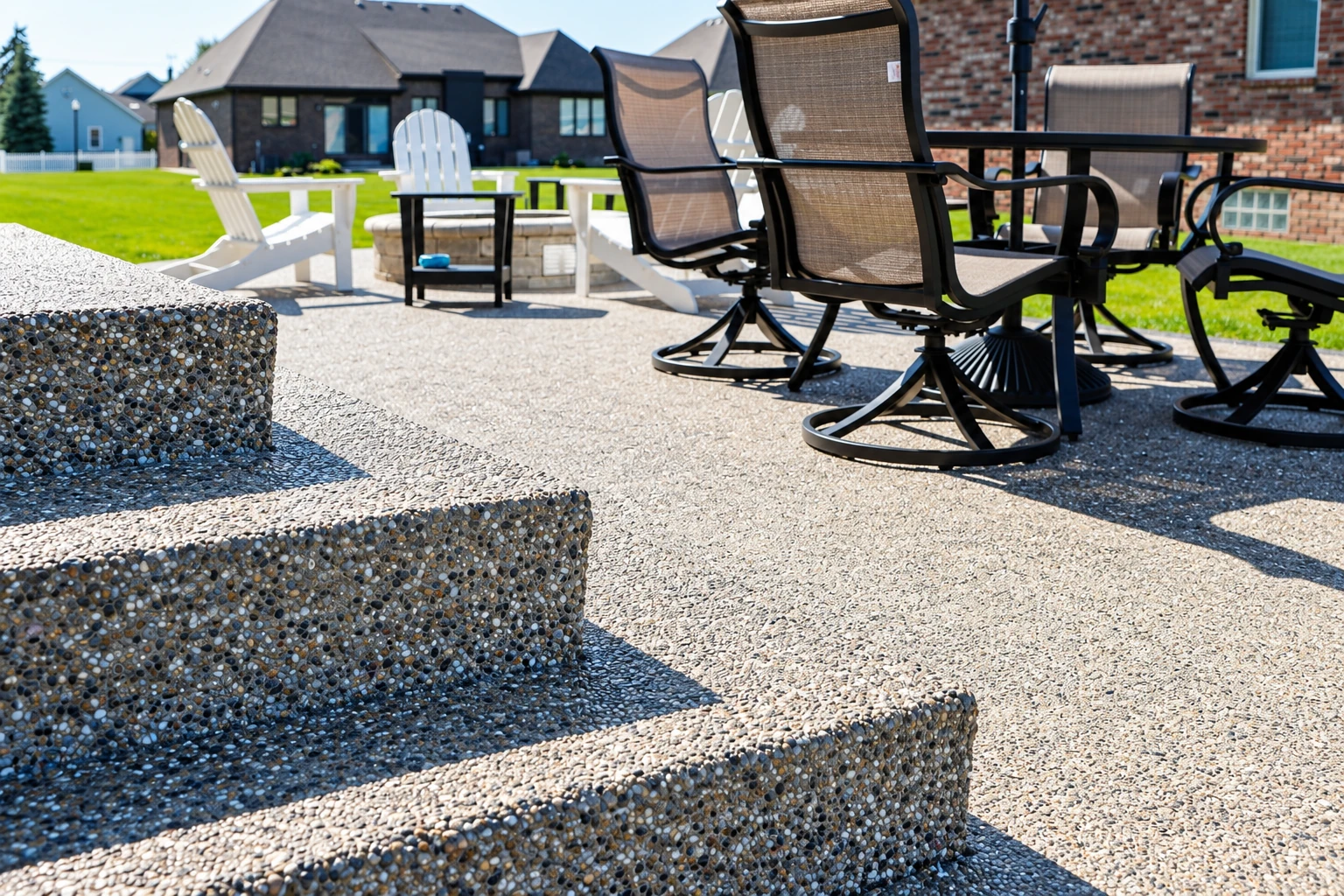
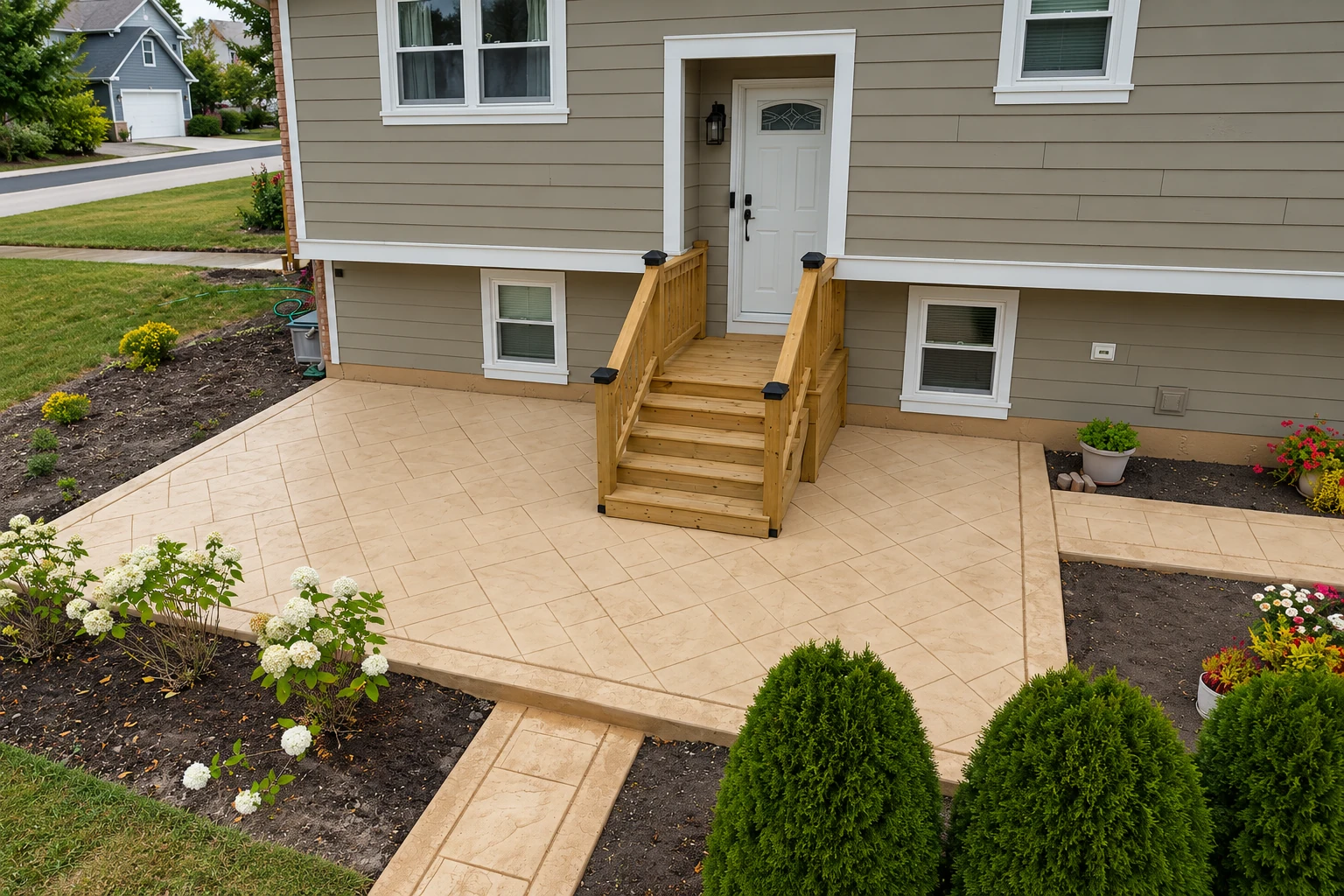
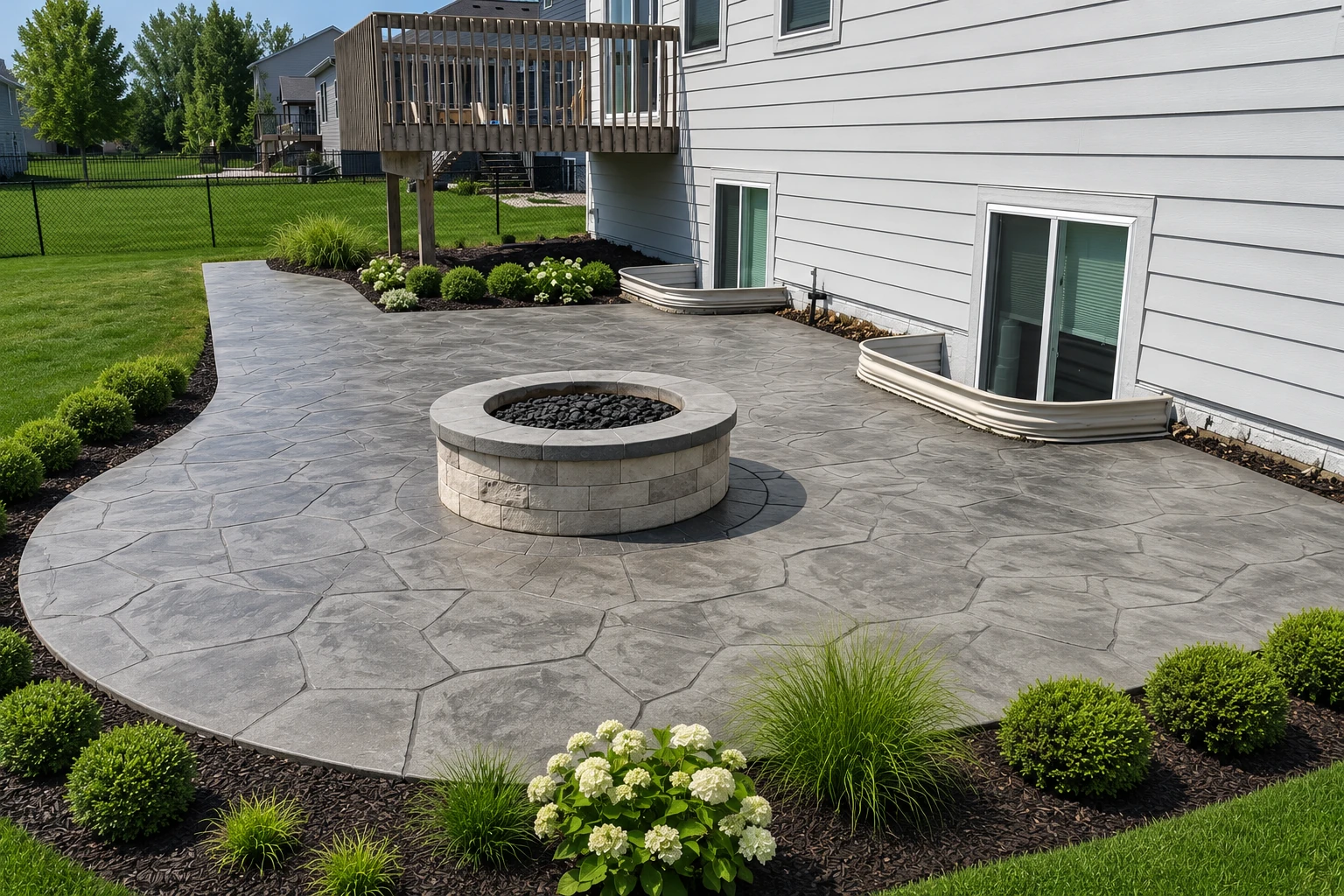
Stamped concrete gives a patio or front entry the look of stone or pavers in one pour, without the gaps that moss and weeds push up through.
Concrete sidewalk building
Walks on sloped lots need a steady grade and a broom finish, a light brushed texture that gives your shoes grip on wet winter mornings.
Garage floor concrete
Garage floors in older homes here crack and stain over time. We break out the slab, rebuild the base and pour a floor that drains to the door.
Decorative concrete
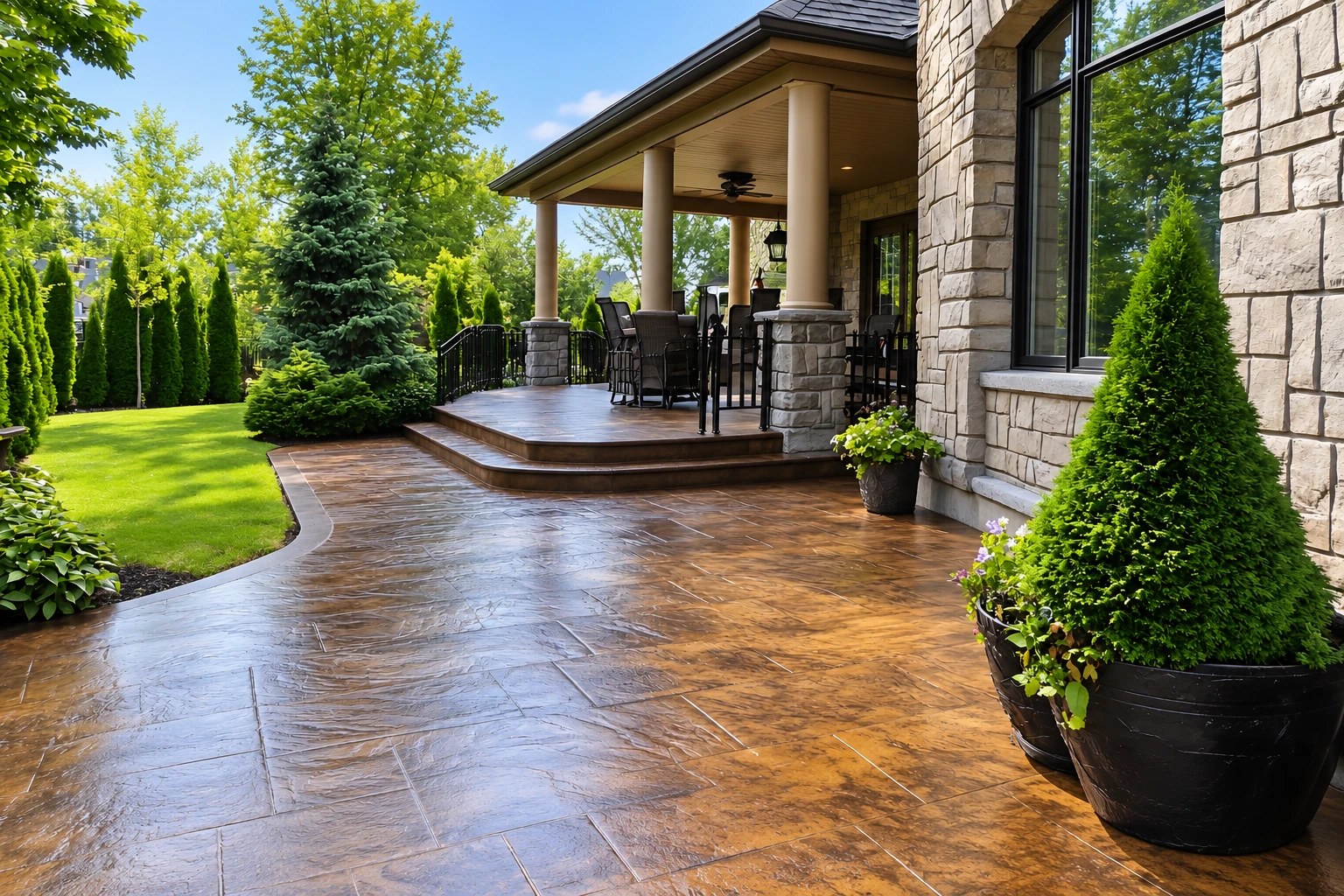
Colored and textured finishes let a new walk or patio match a remodeled house, and we tell you how each one holds up to our rain and moss.
Concrete retaining walls
On hillside lots a concrete wall holds the grade so a driveway, patio or yard stays put. Drainage behind the wall matters as much as the wall itself.
Concrete floor installation
Basement, shop and outbuilding floors here need a packed base and a moisture barrier underneath, because wet ground can push damp up into a slab.
Concrete pool decks
On a terraced island backyard, a pool deck needs grip underfoot and a slope that carries splash and rain to a drain, away from the house.
Concrete steps construction
Houses set above or below the street here often need steps, and we form each rise the same height so there's no odd step to catch your foot.
Slab foundation building
A slab for a garage, studio or addition starts with packing the subgrade, the ground it sits on, and checking how water moves across a sloped lot.
Foundation installation
New foundations on hillside lots usually follow an engineer's plan, and we build to it, with rebar, the steel that ties the concrete together.
Concrete parking lot building
Small lots for island shops, offices and apartments take daily traffic, so they need a thicker slab and a deeper packed base than a home driveway.
Concrete footings
Decks, walls and additions on a slope sit on footings, the buried concrete that spreads their weight, so we dig each one down to firm ground.
Foundation raising
When part of an older house has settled on soft or shifting ground, we can lift it back toward level and support it from below.
Concrete cutting
We cut clean openings in old slabs and walls for drains, doorways or a new walk, so you can replace one section instead of the whole drive.
Get a written estimate for your Mercer Island concrete work
We'll reply within one business day to set up a free on-site estimate. I look at the job myself, and there's no obligation to go ahead.
- Based in
- Kirkland, WA 98033
- Hours
- Mon–Fri: 6 AM–11 PM, Sat–Sun: 8 AM–9 PM
Working on Mercer Island: permits, licenses and steep drives
On Mercer Island, the city's Building Team reviews construction projects against the codes the city has adopted. That makes whether your job needs a permit the city's call, and its approval and inspections set our start date. Before you hire anyone, ask for their registration with the state Department of Labor & Industries, which Washington requires of every construction contractor along with a bond and insurance. Also make sure Mercer Island has been added to their state business license, because the city requires that of any business working here. On a home job of $1,000 or more, a registered contractor also owes you a disclosure notice. We're licensed and insured.
We check which office covers your address before we start, and when a permit's needed we can file it for you or help you file it, then plan the work around the approval. We come onto the island over I-90, the same corridor we use for jobs in Bellevue and Issaquah, so we time the concrete truck to miss the worst of the bridge traffic. Once we're here, the slope, how the truck reaches the forms and how much base and wall work your lot needs are what move the price. The city's review and the weather move the schedule. The written estimate I send after seeing the site gives you the figure for your own job.
Why hillside homes here need solid prep
A lot of island homes are built on hillsides, and plenty of that ground is prone to sliding. Soil under a driveway or patio can creep downhill over the years and take the slab with it, and that's where we see the long cracks and the sections that drop or tilt. We dig past soft fill to firm ground and pack the base in layers. When the grade needs holding, we'd rather build a wall with drainage behind it than pour a nice slab on ground that's still moving. If the budget's tight, cut the fancy finish, not the base. Nobody sees the base on day one, but it decides what you're looking at in year ten.
The other half is water. Wet winters send rain down the slope and under any slab that wasn't built to shed it, so we check where the water runs before we set a form and pitch the concrete away from the house.
What happens when you call us about a Mercer Island job
From the first call to the final walk-through, here's who you'll deal with and when it helps to have you home.
Call or send the form
Tell us what's going on, like a sinking driveway, a patio you want on the slope or a wall that's leaning. We'll set a time for me to come out.
We walk the site together
I look at the slope, the drainage and how a truck reaches the work with you, and I check which city or county office covers your address. Then I send a written estimate, so you see the full figure before you commit to anything.
We prep the ground and pour
Once you're set, we pack the base and set the forms before the concrete arrives, and I'm on site with our crew for the pour. If the truck or the work blocks the street or sidewalk, the city requires a right-of-way permit, and street work on school days generally runs from 9 am to 3:30 pm, so we plan the pour around those hours.
We walk the job together
When it's finished, we walk the job with you and go over curing, the stretch when the concrete keeps gaining strength and needs to be left alone. You can usually walk on a new slab well before you can drive on it, and I'll tell you when yours is ready.
Questions about concrete work on Mercer Island
When can grading or foundation work happen on a steep lot on Mercer Island?
On lots the city treats as erosion, potential slide or steep slope hazard areas, the city's geological hazard rules don't allow clearing, grading, filling or foundation work from October 1 to April 1. The city may grant a waiver with compelling justification backed by a geotechnical evaluation of the site and the work, but it's not something to count on. If your project means digging on a slope, we'd plan it for the dry months and get the paperwork moving early.
Do I need a geotechnical report to build a foundation on Mercer Island?
You do if the new structure will sit in a sensitive or critical area, such as a landslide, steep slope, seismic, erosion, flood, wetland or stream hazard area. The report is signed and stamped by a Washington State licensed geotechnical, geological or structural engineer, and every one includes a statement of risk. When there's a report, we build the footings and foundation to what it calls for.
How deep do concrete footings need to be on Mercer Island?
Footings need to go below the frost line, which the city's residential code puts at 12 inches. That's the depth the ground can freeze to, and a footing set above it can heave when it does. On a slope or soft fill we often go deeper to reach firm soil, and an engineer's plan, when your job has one, sets the final depth.
How do I know if I need a tree permit for a new patio on Mercer Island?
Assume you do, because the city's own guidance says the answer to whether a tree permit is needed is almost always yes. Check the city's permit guidance before anyone cuts a tree or its roots to make room for a slab. When I look at the site, I'll point out which trees sit close enough to the work to raise the question.
How much does a new concrete driveway cost on Mercer Island?
On Mercer Island the ground drives the price more than the concrete does, so a steep drive costs more than a flat one of the same size. Digging out soft fill, tearing out the old slab, a pump when the truck can't reach the forms, and a wall or engineering on a slope all add to it, while a plain broom finish costs less than color or stamping. I'll give you the figure for your driveway in a written estimate after I've seen it.
What causes concrete driveways to crack on Mercer Island?
Most cracks here start under the slab, with a base that was raked level instead of dug out and packed, or rain running down the slope and washing soil out from underneath. We pack the base, pitch the slab to drain, and cut control joints, shallow grooves that give the concrete a planned place to crack, before it sets hard. Concrete still shrinks as it cures, so a hairline crack in a joint is normal, but a slab that drops or splits across the middle usually means the ground moved.
Kirkland, WA
Tell us about your Mercer Island concrete job
Call (425) 285-8195 or send the form, because the sooner I see the site, the sooner we know whether your job has to wait for the dry months.