
Concrete contractor in Lake Forest Park, WA - Slabs built for wooded, sloped lots
Precision Kirkland Concrete is a concrete contractor pouring driveways, patios, walks, steps and garage floors in Lake Forest Park, WA, plus footings, walls and small foundations. I look at each job myself and pour alongside our crew.
- Licensed and insured.
- Free on-site estimates.
- Expect a reply within 1 business day.
Lake Forest Park houses among hills, trees and creeks
Lake Forest Park is mostly homes on wooded lots running up the hills from Lake Washington, with the shops and offices clustered near the lake. Creeks thread through the city, Lyon Creek among them, and the Burke-Gilman Trail follows the shore on toward Kenmore.
On our jobs here, that means driveways that pitch hard up or down from the street, tall trees whose roots have lifted the old slab, and low corners of the yard that stay soft near a creek. So most of what makes a slab last here happens before the pour, in digging out soft dirt, packing a solid base and working out where the water goes on its way downhill.
Concrete work we do on Lake Forest Park properties
Concrete driveway building
Plenty of driveways here run uphill or down through trees, so we dig out soft soil, pack a solid base and pitch the slab away from the garage.
Concrete patio construction
A patio under tall trees stays shaded and damp, so we set the base and slope so water runs toward the yard instead of sitting against the house.
Stamped concrete services
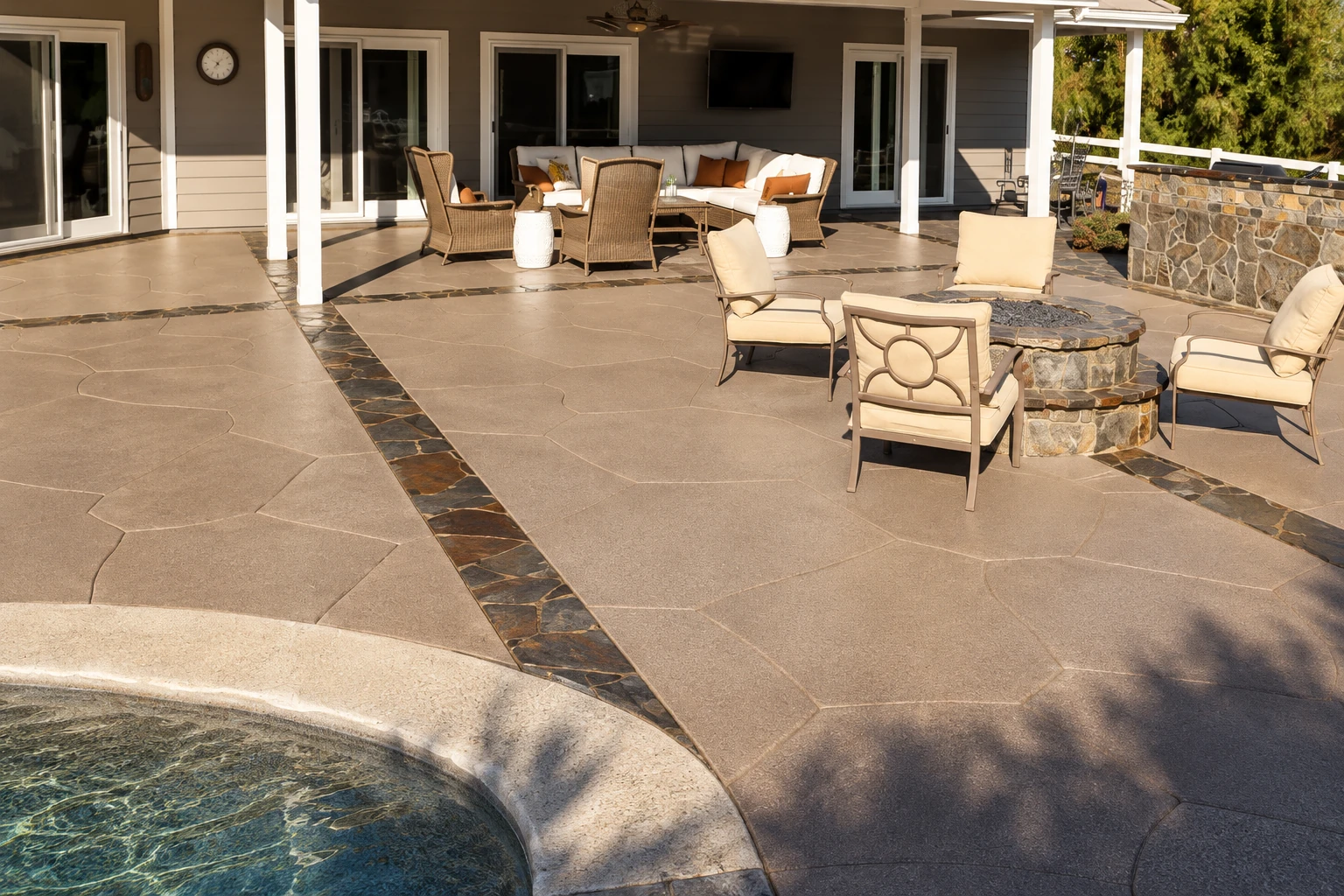
Stamped concrete gives a patio or walk the look of stone or brick, and on shady lots we talk through texture and sealing so it grips underfoot.
Concrete sidewalk building
Walks to the front door here often wind downhill between roots, so we pour them with a broom finish, the light texture that gives your shoes grip.
Garage floor concrete
Plenty of garages here have slabs cracked, sunk or stained from decades of cars, and we tear them out and pour a floor that drains toward the door.
Decorative concrete
Colored, exposed-aggregate or scored concrete suits homes set back in the trees, and we keep the base work the same whatever the surface looks like.
Concrete retaining walls
On sloped lots a concrete wall holds back the hill for a level yard or driveway, with drainage behind it so water doesn't build up and push on it.
Concrete floor installation
Basements, shops and additions built into a hillside need an interior slab that's flat and sits on packed ground, so we prepare the base before any concrete arrives.
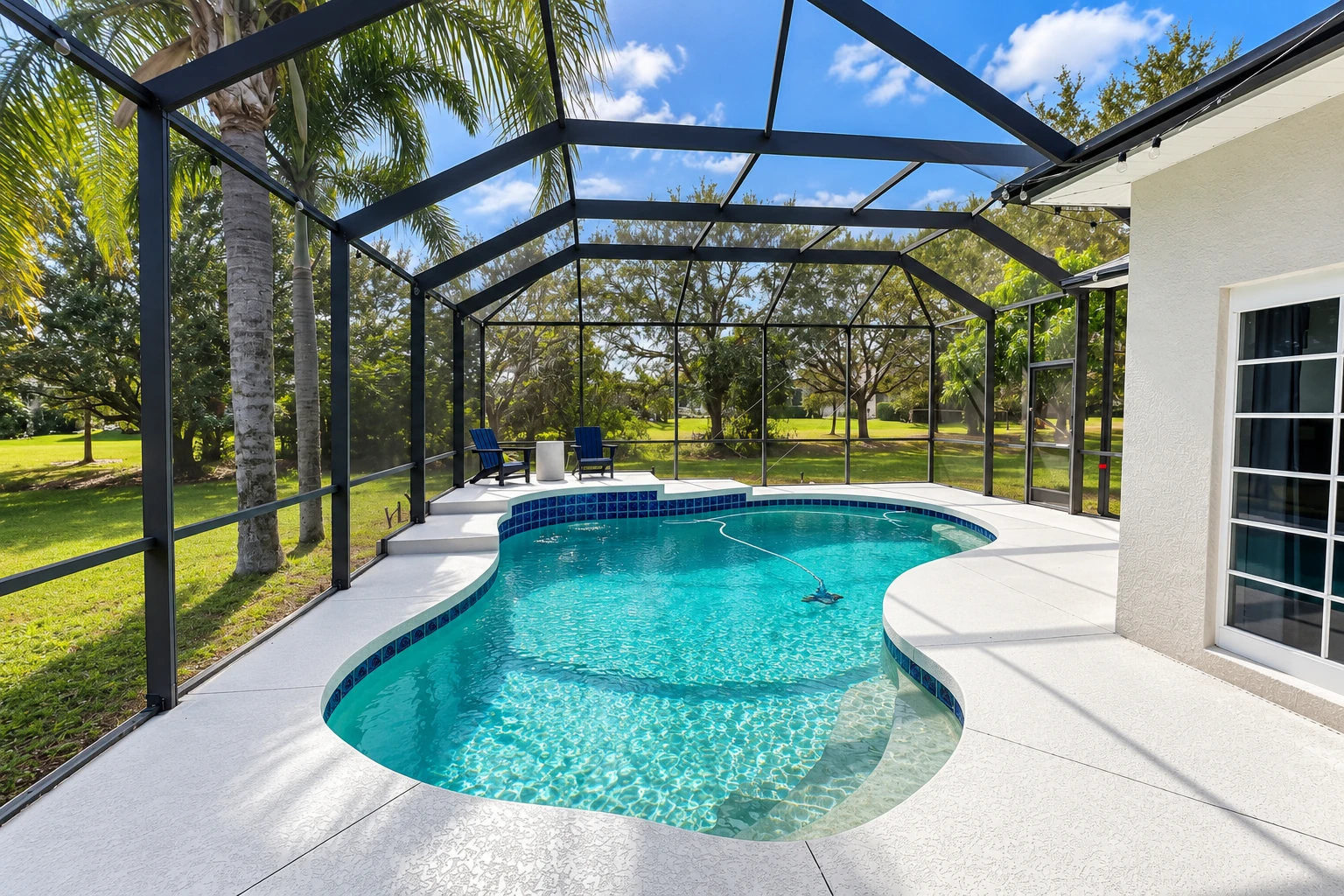
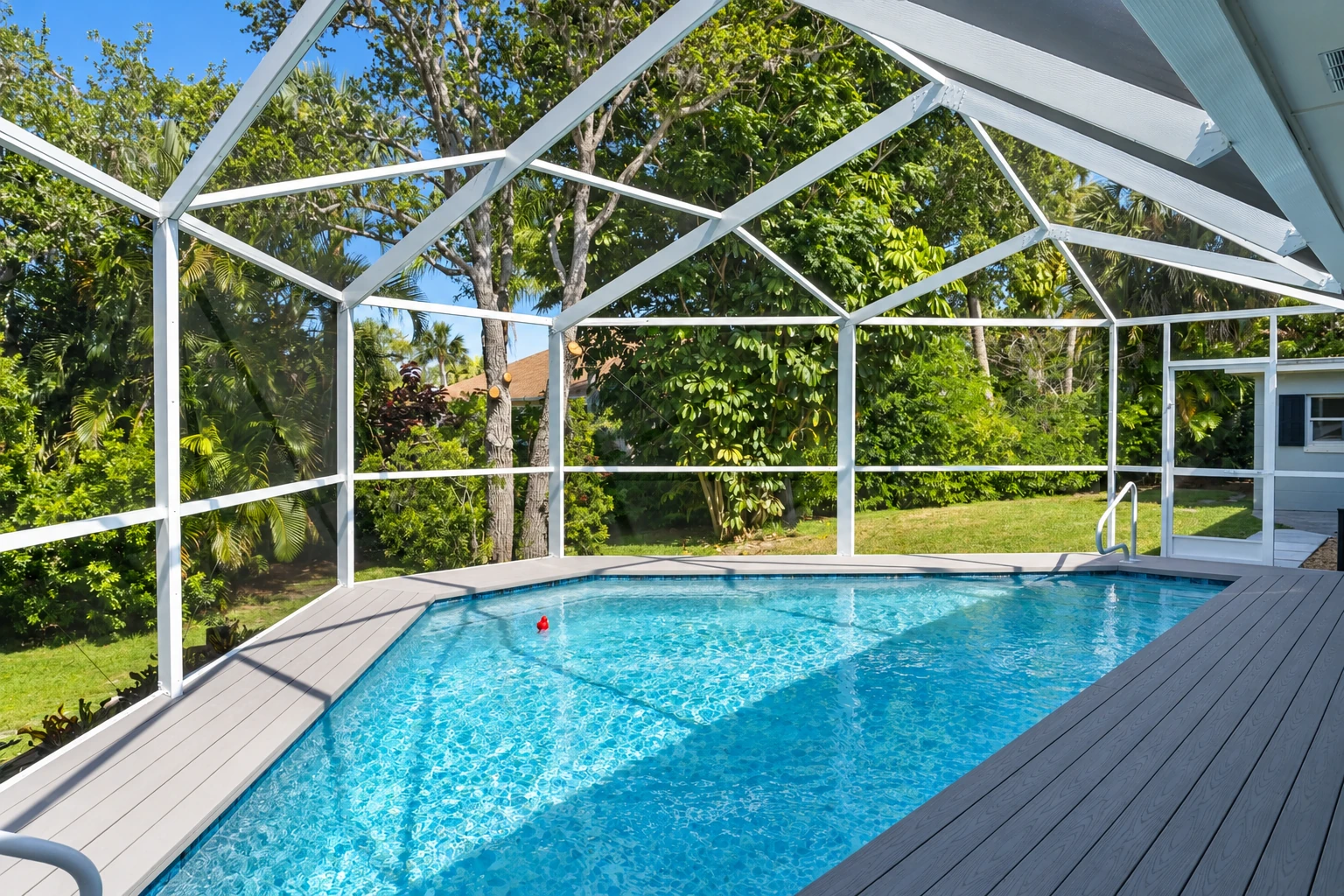
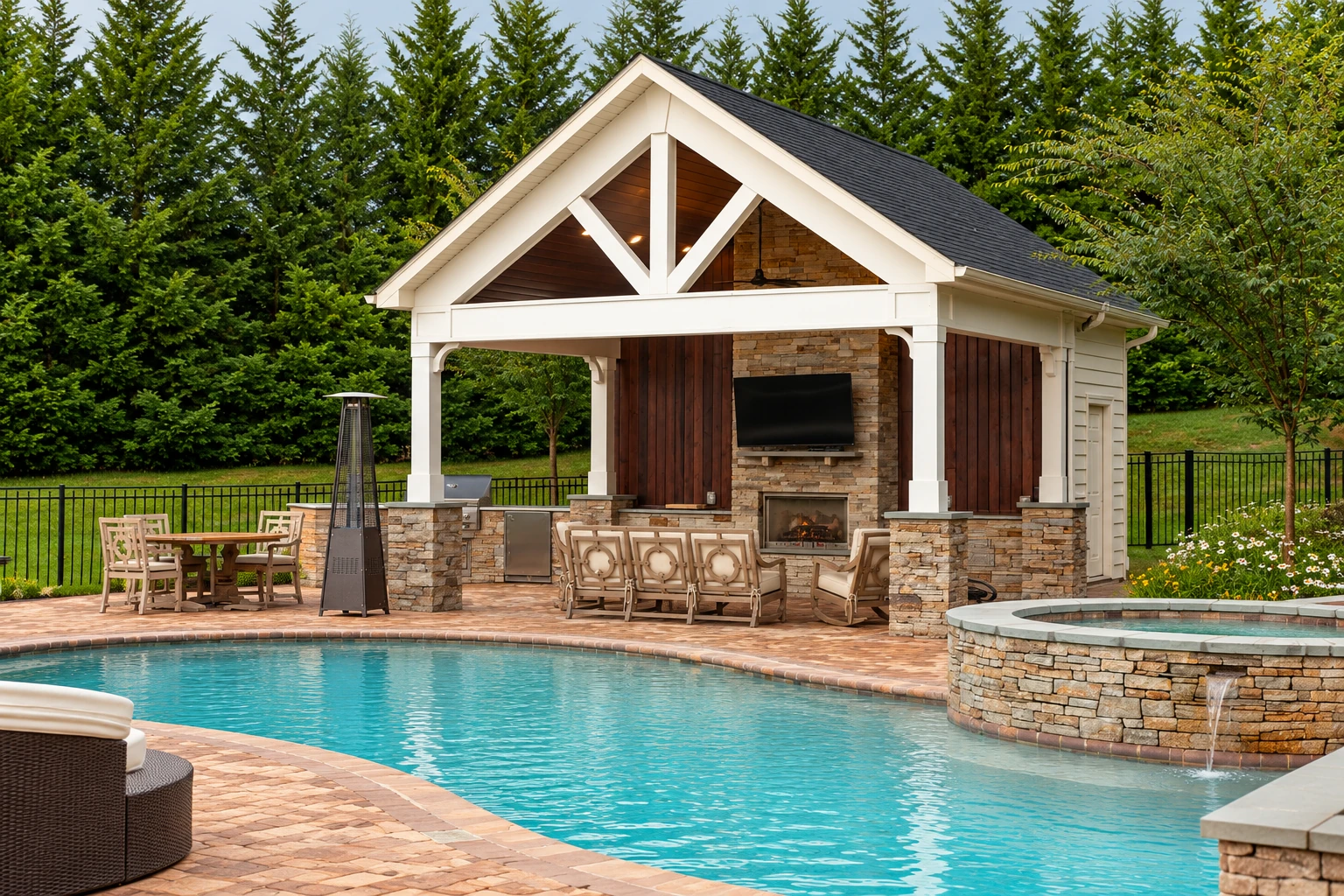
Concrete pool decks
Around a backyard pool, we pour a deck with grip underfoot and a pitch that sends splash out to the yard instead of back toward the house.
Concrete steps construction
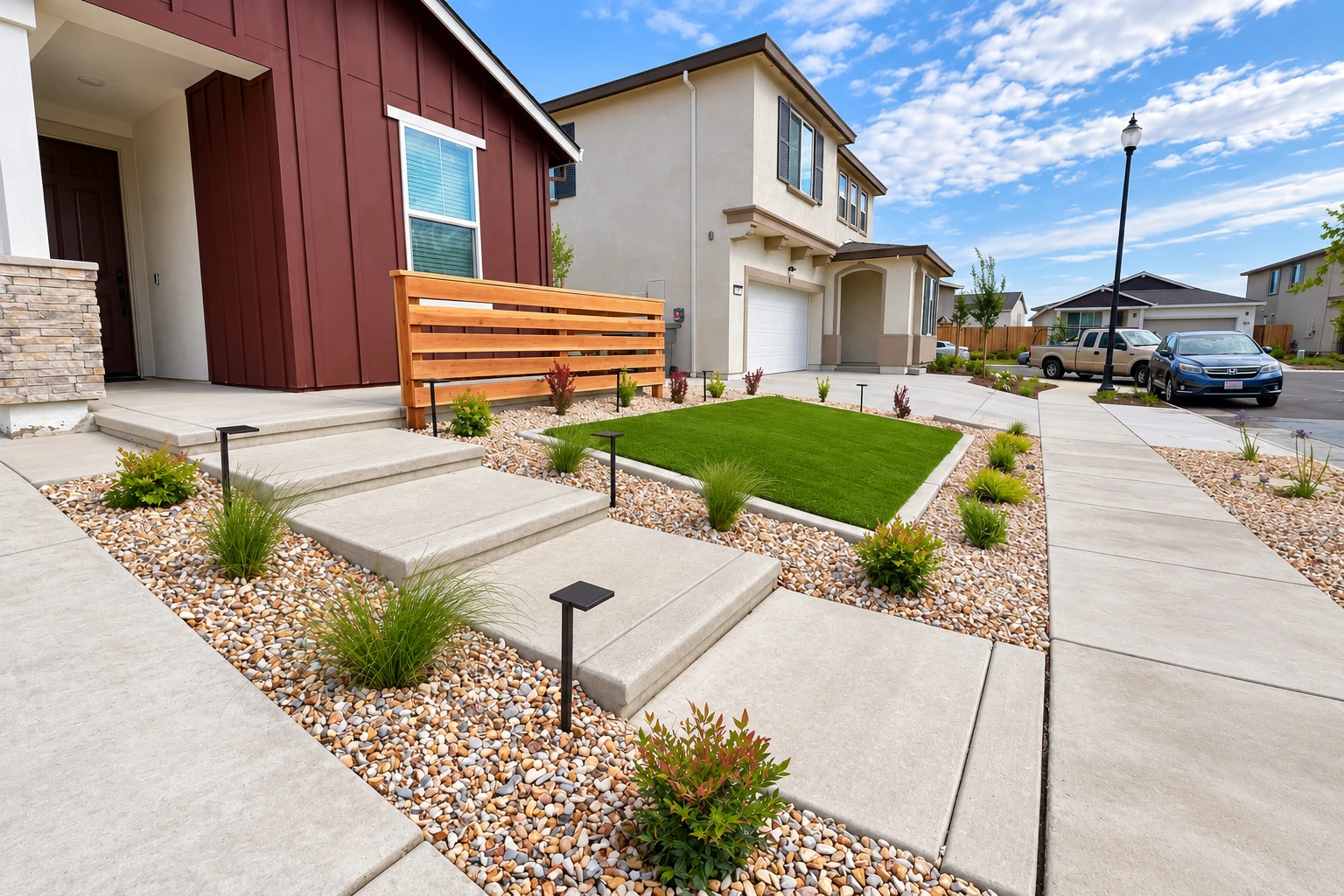
Houses above the street often need a run of concrete steps, and we form each one the same height so the climb feels even underfoot.
Slab foundation building
A garage, shop or addition on a slab foundation needs ground that stays put, so we dig past soft or wet soil before we build the forms.
Foundation installation
New foundations for additions and outbuildings on tight, sloped lots take careful layout and forming, and I'm on site with our crew for the pour.
Concrete parking lot building
Small commercial lots and shared parking pads need a thicker slab and planned drainage, because standing water and heavy turning wheels break weak concrete fast.
Concrete footings
Decks, porches, walls and posts on hillside lots sit on concrete footings, and we size and dig them for the ground we actually find there.
Foundation raising
When part of a house or garage has dropped on soft ground, we lift and support it, or tell you if something simpler fits the problem.
Concrete cutting
We saw-cut old concrete for a new drain line, a wider driveway or a doorway, and cut out sections that tree roots have heaved.
Get a written concrete estimate for your Lake Forest Park home
Send the form and we'll get back to you within one business day to set a time. I come out, look at the site with you and send a written estimate, free and with no obligation.
- Based in
- Kirkland, WA 98033
- Hours
- Mon–Fri: 6 AM–11 PM, Sat–Sun: 8 AM–9 PM
Permits, licenses and price for concrete in Lake Forest Park
Construction permits in Lake Forest Park come from the city's Community Development Department, and whether your slab, wall or footing needs one is the city's call, not ours. That decision can set the whole schedule, so we check what covers your address before we start, and when a permit is needed we can file it for you or help you file it, then plan the start around approval and inspections. Before you hire anyone, ask for their contractor registration number, since the state requires every construction contractor to register with its Labor and Industries department, and ask whether they hold a Lake Forest Park business license, which the city requires of every business working here. We're licensed and insured.
Price here mostly follows what's under and around the slab. Tearing out old concrete, hauling off soft soil, building the base back up and getting a truck up a steep or narrow drive all add cost, and so do size, thickness and a decorative finish, and your written estimate gives you the number for your own job. We're based in Kirkland and do the same flatwork, which covers driveways, patios, walks and garage floors, across the cities around it and out as far as Issaquah, though few streets we drive a mixer up are as winding as the ones here.
Why Lake Forest Park slabs crack, sink and hold water
Roots are the first thing I look for on a lot here, because a big tree beside the driveway keeps pushing up the edge of a slab until it cracks, and pouring new concrete over the same roots just restarts the clock. We plan the new slab's line and base around them, and if a tree has to come out, that question goes to the city first, as the questions below explain.
Slopes do the rest. Water off a hill or a downspout gets under a slab and softens the subgrade, the packed ground it sits on, until the slab sinks or tips toward the house, so we set the pitch and drainage before we set the forms.
How a concrete job runs when you call us in Lake Forest Park
From your side, it's a call or a form, one site visit with me and a written estimate before any concrete is ordered.
Call or send the form
Call (425) 285-8195 or use the form on this page, and we set a time for me to come out to your house. Be there if you can, so we can walk it together.
Walk the site with me
I look at the old slab, the slope, the trees and where the water runs, check which city or county office covers your address, and then send you a written estimate. It spells out the base and drainage work, so you can see what the price covers.
Wait on approval, then prep
If your job needs a building permit, the city's typical review time is 8 weeks, so we set the start after approval and plan around the inspections. Once you're set, we dig out, pack the base and build the forms before the concrete truck shows up.
Pour, finish and walk through
I'm on site with our crew for the pour and finish, and we walk the job with you at the end. We'll tell you how long to let it cure, the wait that lets the concrete gain strength before you walk or park on it.
Questions about concrete work in Lake Forest Park
Do I need a permit for a concrete driveway or patio in Lake Forest Park?
It might, and the city decides, so check before any work starts. Lake Forest Park issues permits to build, alter or repair a building or structure, and its permit list names decks and fences but doesn't spell out driveways or patios. You apply online through the city's Permit Center, and a receipt isn't a permit, so inspections only start once the permit is actually issued.
Do I need a permit to remove a tree for a new driveway in Lake Forest Park?
Possibly, so check with the city before any tree comes down, because the city takes tree permit applications and the fee is $120.00. A major removal also needs an arborist report and review by the city's Urban Forest Planner, billed at $95 an hour, and the city posts a notice of application for at least 2 business days on a minor permit or 14 days on a major one before issuing it. Build that wait into the date you want your driveway.
How do I know if a concrete contractor is bonded in Washington?
Washington law requires construction contractors to be bonded and insured as well as registered, so ask for the registration number, which they have to put on their ads and bids. The bond is $30,000 for a general contractor and $15,000 for a specialty contractor. On a home job of $1,000 or more, the contractor should also give you the state's disclosure notice to customers.
How much does a new concrete driveway cost in Lake Forest Park?
Your price comes from your site, and on lots here the biggest swings are tearing out the old slab, how much soft soil comes out and how much base goes back in, plus size, thickness, finish, truck access and any city permit fees. If money is tight, spend it on the base and keep the finish plain, because a fancy top on a weak base cracks just the same, and the base is the one part you can't fix later without starting over.
What causes concrete driveways to crack and sink in Lake Forest Park?
Most cracking and sinking starts under the slab, from a base that was raked flat instead of dug out and packed, roots pushing up, or water running under it on a slope. Concrete also shrinks as it dries, so we cut control joints, shallow grooves that give it a straight line to crack along, on time, and add rebar, the steel inside that holds the pieces together if it does crack.
How do I handle drainage for a new slab near a creek in Lake Forest Park?
Work out where the water goes before the pour, because the city uses the King County Surface Water Design Manual as its drainage standard. If your lot sits near a creek, a wetland or the lake shore, ask the city whether its critical area work permit or shoreline applications apply, since both are on its list. On our end, we pitch the slab away from the house and toward where the water is meant to go.
Kirkland, WA
Get your Lake Forest Park slab started right
Call (425) 285-8195 or send the form, because one look at the ground tells us whether your old base can stay or has to come out.